Treat one phrase that sounds like the relationship with the dog as the ring's one job. Every other choice, from finish to placement, should make that detail easier to read, not harder.
Good starting points include "Good Boy," "Run Free," "Still My Shadow," "Always Home," the dogs nickname, a trail name, or the years together. Whichever one you pick, keep the rest of the design quiet around it.
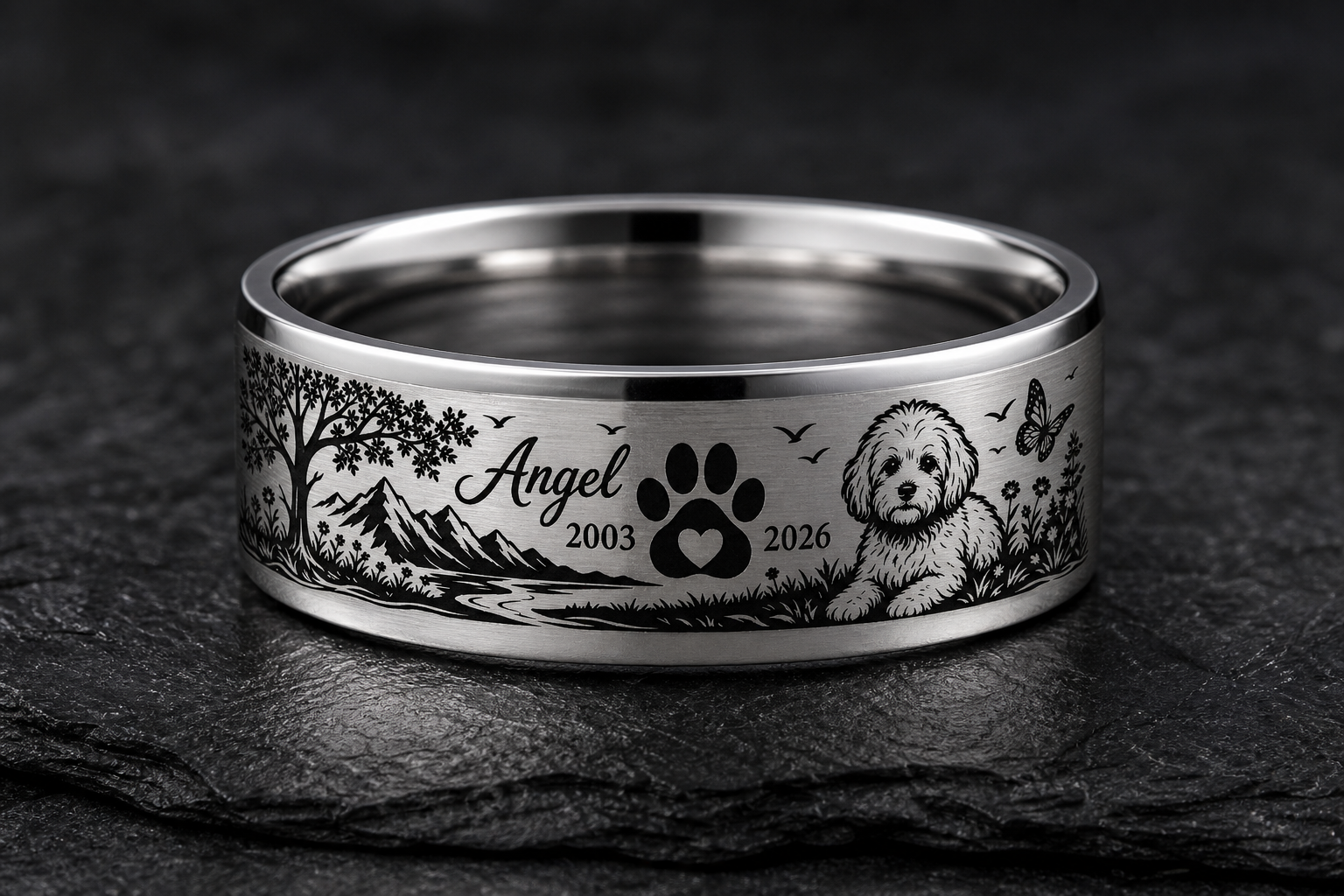
short phrases can go inside, while the outside can hold a paw, nose, collar, or silhouette. Decide this before finalizing artwork, since it changes how much detail the design can actually hold.
simple finishes keep emotional wording from feeling overdesigned. Choose the finish based on how the ring will actually be worn, not just how it looks in a first mockup.
choose words you actually used with the dog if possible. Read it out loud before finalizing; wording that sounds right out loud usually reads right on metal.
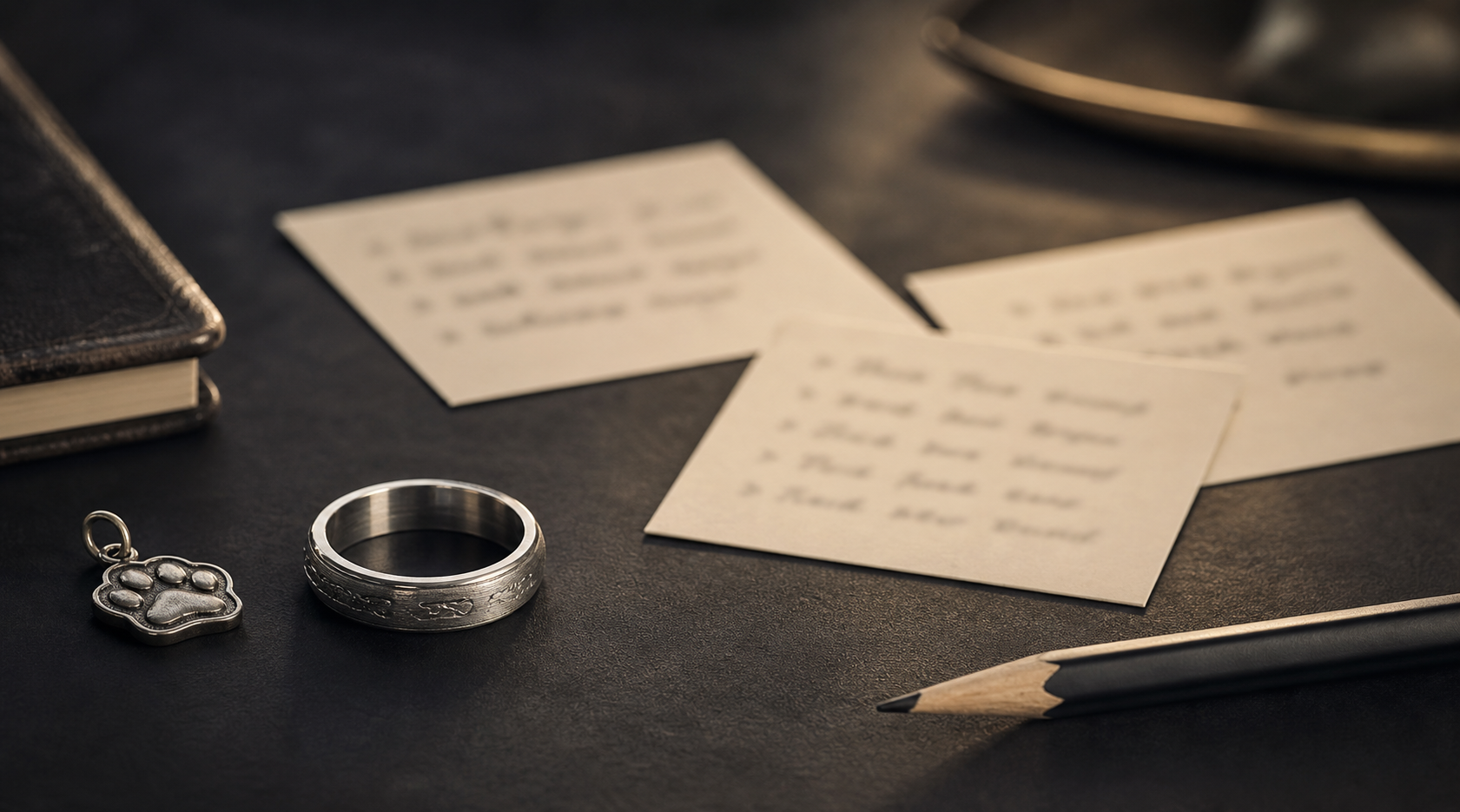
if the phrase comes from a tag, card, or note, send a photo of the source. The clearer the source, the less the final engraving has to be simplified or guessed.
pair the phrase with one visual mark, not a full list of pet symbols. A ring with one clear center of meaning almost always outperforms one with several.
Avoid long grief sentences that become hard to read on a curved band are the usual problems here. When in doubt, remove a detail rather than add one.
Before going further, decide whether the words should comfort, celebrate, or gently make you smile. That answer should guide the phrase, finish, and placement that follow.
The next step is simple: bring the phrase, dog name, date, and one print or photo into the Friends of Irony designer.